
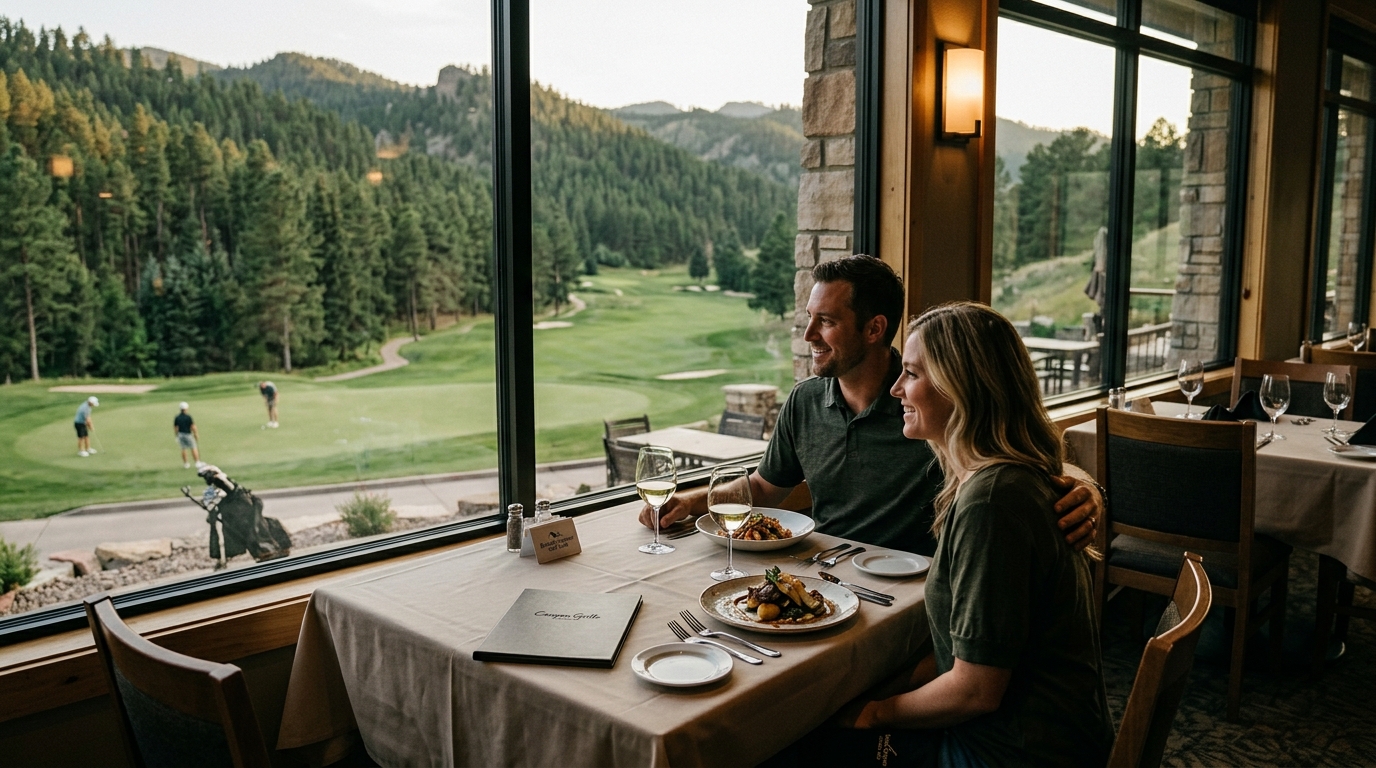
Golf course dining prices in the Black Hills are higher due to remote logistics, seasonal labor costs, and premium local sourcing. Boulder Canyon Golf Club addresses these factors by offering a destination restaurant experience that balances quality with competitive regional pricing. Understanding these drivers helps golfers budget accurately for their Black Hills trips.
Remote Logistics and Supply Chain
Transportation costs significantly impact food pricing in rural areas. Boulder Canyon Golf Club is located in Sturgis, South Dakota, which is a scenic 40-minute drive from Rapid City Regional Airport. This distance means that fresh produce, meats, and beverages must be transported over longer distances compared to urban dining establishments. The cost of fuel and specialized cold-chain logistics for perishable goods adds a baseline premium to every menu item. For a golf course in a remote location, these overheads are passed directly to the consumer to maintain ingredient freshness.
Seasonal Labor and Staffing
The Black Hills golf season is strictly limited, typically running from April to October. This creates a compressed hiring window where restaurants must recruit, train, and retain staff in a short period. Labor costs are higher in seasonal environments because employers often offer competitive wages to attract talent during the peak months. Boulder Canyon Golf Club operates its facilities seven days a week during the season, requiring a robust staffing model. The demand for skilled culinary professionals in a remote area further drives up wage expectations, contributing to the overall cost of dining services.
Local Sourcing and Premium Ingredients
Local sourcing is a defining characteristic of high-quality golf course dining in the region. Boulder Canyon Golf Club emphasizes locally sourced meats and ingredients for its dining options. While local sourcing supports the regional economy and ensures freshness, it often comes at a higher price point than mass-produced national brands. The Canyon Grille, the club's new destination restaurant, features hand-cut steaks and wood-fired Texas-style BBQ. These premium items require specific cuts and preparation methods that increase the cost of goods sold. The commitment to quality ingredients is a primary driver of higher menu prices in the Black Hills.
Amenity Overlap and Service Fees
Golf course dining often includes service fees and taxes that are not always immediately visible on the menu. At Boulder Canyon Golf Club, food and beverages are charged a 4.5% tax and a 20% service fee. This service fee compensates the staff for the elevated hospitality expected in a destination dining setting. Additionally, the dining experience is integrated with the golf course amenities, such as the new Golf Shop and the scenic views. The overlap between dining and recreational facilities means that the restaurant must maintain a high standard of presentation and service, which is reflected in the pricing structure.

Boulder Canyon’s Approach to Value
Boulder Canyon Golf Club positions itself as a value-oriented destination despite the regional cost drivers. The club has invested over $2 million in course improvements and infrastructure since 2021. This investment includes the new Canyon Grille and an expanded Golf Shop, which aim to provide a premium experience without excessive price inflation. By offering a variety of dining options, from box lunches to full BBQ buffets, the club caters to different budgets. The focus on locally sourced, high-quality food ensures that the price reflects the true value of the ingredients and the service provided.
Key Takeaways
- Remote logistics in the Black Hills increase the cost of transporting fresh ingredients to golf courses.
- Seasonal labor markets in the region drive up staffing costs for dining establishments.
- Local sourcing of premium meats and produce adds a quality premium to menu prices.
- Service fees and taxes are standard components of golf course dining costs in the area.
- Boulder Canyon Golf Club balances these costs by offering competitive rates and high-quality amenities.
- The new Canyon Grille provides a destination dining experience that justifies the regional price point.
Frequently Asked Questions
Why is food more expensive at golf courses in the Black Hills?
Food is more expensive due to remote logistics, seasonal labor costs, and the use of premium local ingredients. These factors increase the cost of goods and services, which is reflected in the menu prices.
Does Boulder Canyon Golf Club charge a service fee for dining?
Yes, Boulder Canyon Golf Club charges a 4.5% tax and a 20% service fee on food and beverages. This fee supports the high level of hospitality and service provided by the staff.
What is the Canyon Grille at Boulder Canyon Golf Club?
The Canyon Grille is a new destination restaurant at Boulder Canyon Golf Club. It offers hand-cut steaks, wood-fired BBQ, and a mountain-modern dining experience with sweeping canyon views.
How does local sourcing affect dining prices in the Black Hills?
Local sourcing ensures freshness and supports the regional economy, but it often costs more than mass-produced ingredients. This premium is passed on to the customer in the form of higher menu prices.
Is Boulder Canyon Golf Club open year-round for dining?
Boulder Canyon Golf Club operates its golf facilities from April to October. The dining options are available during the golf season, with specific hours and menus varying by day and season.
What are the dining options available at Boulder Canyon Golf Club?
Dining options include box lunches, a hamburger bar, and a BBQ buffet. The new Canyon Grille also offers a full menu of steaks, chops, and gourmet burgers for a more elevated dining experience.